
St. Louis Resident Lookup Records
No official countywide list answers every question about one person. Instead, match the record to the question. The county property tools are best for a current tax parcel and owner field. Missouri’s voter tool is an exact-data registration check, not a name-only roster. Case.net identifies public litigant roles, while the library’s directories preserve dated household clues. Vital and custody systems have tighter boundaries. Keep the source wording with each result, because an owner, party, registrant, and head of household are different record roles.
| Record | What It Confirms | Where | Access |
|---|---|---|---|
| Current parcel | Tax/parcel owner name, locator, situs and mailing fields | St. Louis County Real Estate Search | Public county search |
| Voter registration | Whether supplied registration data matches a state record | Missouri Voter Outreach | Exact required identity fields |
| Court docket | Public litigant role, case number, filing date and events | Missouri Case.net | Public results vary by case |
| Historical directory | Dated name, address and household context | St. Louis County Library directories | Digital, print or microfilm route |
| Vital record | Eligible family relationship or date/place evidence | Missouri DHSS and State Archives channels | Rule and date dependent |
Use the most direct source first. A property question starts with a parcel locator. A historical family question starts with a dated directory or archive index. A court question starts with a party name and court filter. The county GIS view can then compare a parcel’s property address with its owner mailing fields, which prevents a mailing address from being mistaken for present occupancy.
Note: Record the source date and the person’s role before combining results from St. Louis County and statewide systems.
Search St. Louis Court Roles
St. Louis County sits in Missouri’s 21st Judicial Circuit. The county court instructions direct public case searches to Case.net. Begin with the last name or business name, then add first or middle names where the route allows them. Select the 21st Judicial Circuit or St. Louis County when available. A case number is the strongest way to reopen a known file. Name matches require more care, especially when more than one person shares a name.
| Case.net field | Use in a resident check |
|---|---|
| Last or business name | Primary litigant-name search, not a search for everyone mentioned in a case. |
| First or middle name | Optional where displayed; compare one spelling variant at a time. |
| Court and case type | Narrows the route to the 21st Judicial Circuit and a relevant public category. |
| Case number | Best verification key when known from a notice, parcel trail, or earlier result. |
| Result and docket | Read party role, filing date, events, status and disposition rather than relying on a result line. |
A docket proves participation in a public case, not residence. Witnesses, victims, children, protected parties, sealed material, and confidential details may not appear. For a probate or certified-file question, ask the Circuit Clerk or Probate Clerk about the current copy route. Municipal matters are separate from the county/state path and may require the clerk for the municipality identified by parcel data.
Use Exact Missouri Voter Fields
The state voter-registration lookup is designed to confirm a registration using exact information. It requires the registered first name, last name, date of birth, last four digits of the Social Security number, and county. It does not operate as a public name-only directory of nearby residents. A result can be protected, and a registration record can change between updates, so it should remain a single dated clue in a St. Louis resident lookup.
The County Board of Elections has a separate EIS voter-list request form for specified countywide, district, or municipal files and optional election history. Its fields can include street, house number, ZIP, precinct, split, registration date, and election-date information. The form carries the RSMo §115.158.6 use restriction, and its stated fees and payment conditions should be confirmed before ordering. Do not treat a requested voter list as an occupancy roster.
St. Louis Vital Record Boundaries
Missouri vital records are not an open name directory. DHSS restricts certified copies to applicants with a direct and tangible interest and adequate identification. State recording begins in 1910 for birth and death records, while the state marriage and divorce registry begins in 1948. Local public-health channels may issue certain recent forms, but their availability and fees differ. A marriage or divorce statement is not the same record as a court decree or a birth or death certificate.
See the Missouri DHSS applications and forms hub before selecting a request type.
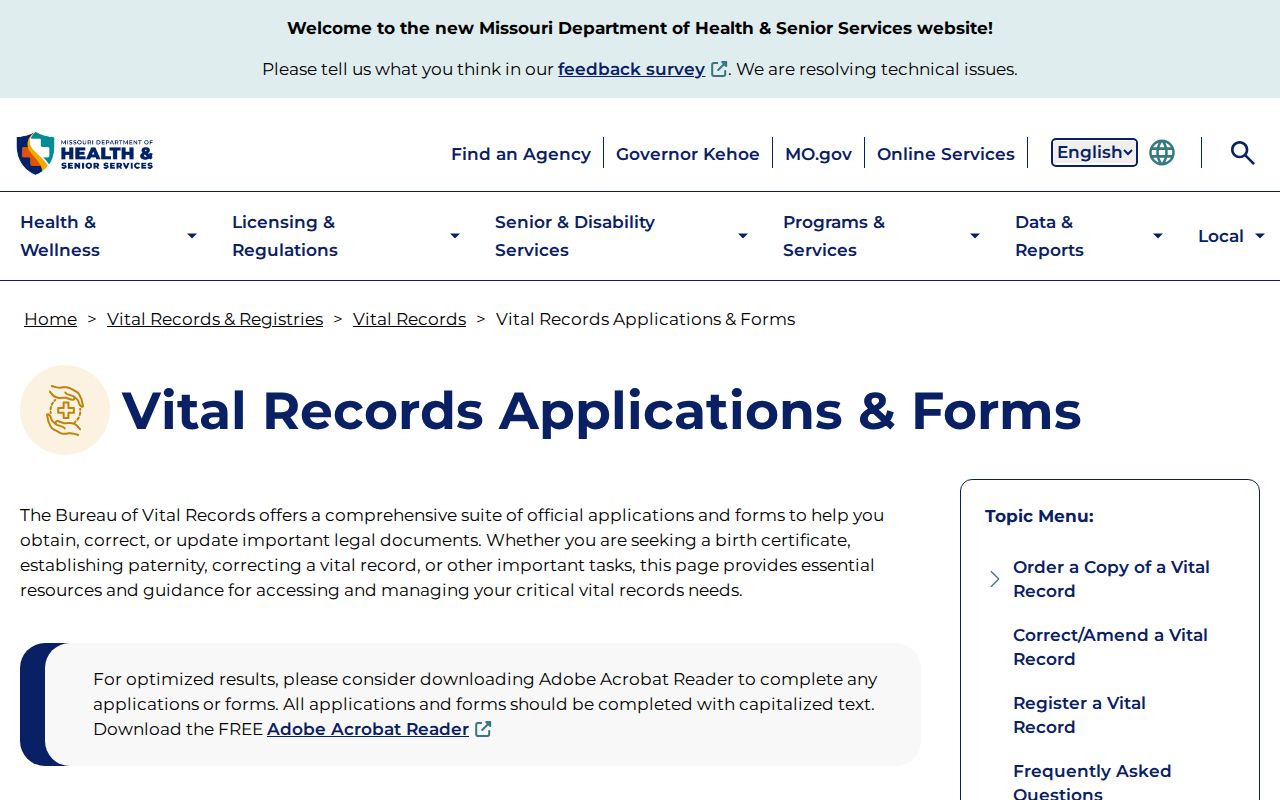
The form route distinguishes subject, applicant, relationship, purpose, identity, and payment information. Death records older than 50 years have a separate archival disclosure path under RSMo §§193.225 and 193.245. For pre-1910 St. Louis County research, use an archival index, library registers, and historical sources as finding aids rather than assuming a modern certified copy is available.
Note: DHSS has announced registration-system modernization phases, so confirm the current form route before sending an application.
Verify St. Louis Resident Records
A reliable resident lookup keeps every candidate separate until two independent sources agree on the relevant fact. The sequence below fits a person with a known name and a possible St. Louis County address. It favors public records with a clear custodian and avoids turning a single matching name into a conclusion.
- Write the name exactly as supplied, including middle initials, suffixes, a former name, and the date or municipality that belongs with it.
- Search the county parcel route by name or address and preserve the locator, property address, owner string, deed book/page, tax year, and displayed record date.
- Use the GIS parcel view to distinguish situs from mailing fields, then compare one dated library, court, or voter result that answers the same narrow question.
- When a court result is relevant, capture the case number and party role, open the docket, and ask the clerk for a copy only if the public record supports that next step.
- Stop when the evidence reaches a protected field, a sealed case, or an eligibility-limited vital record. The custodian, not a third party, decides access.
Use the record terms below consistently when saving the result, its identifier, and the access date.
- Docket
- The dated list of events and filings in a court case. It identifies a case process, not a person’s home.
- Index and image
- An index is a searchable listing of record details; an image is the document scan or copy that may have separate access rules.
- Certified copy
- A copy issued and authenticated by the record custodian for uses that require the office’s official certification.
St. Louis Resident Lookup Sources
Some questions belong in a specialized system rather than a broad name search. For a relative or former classmate, the library’s yearbooks, directories, newspapers, and obituary service provide dated context. For an estate question, start with public probate information and death or burial evidence, then use the Probate Clerk’s file-copy route. For an organization named in a deed or permit, the Secretary of State entity and UCC routes, or the proper professional board, may establish a public affiliation. A registered office is a statutory contact address, not proof of a personal residence.
Missouri’s Adoption Information Registry is the lawful connection path for eligible adopted adults, biological parents, and adult siblings. It uses mutual-consent rules and the CD-51a, CD-51b, and CD-51c forms. A match is not a public parent search. Historical household work can also use the county directory run and reverse-address material, where a reader needs to recover an earlier household without treating it as a current address.
St. Louis Record Systems Stay Separate
County custody information, the Missouri Department of Corrections search route, and the state offender registry each describe a different official system. None is a general resident lookup, and an absence from one is not evidence that a person has never been in the county. The county jail-information page directs inquiries to Justice Services, but the research did not identify a public live county roster. DOC reports that its offender database is updated nightly, while health, treatment, and mental-health information remains confidential.
Use the Missouri Department of Corrections public-search entry only for the narrow state-custody question it publishes.
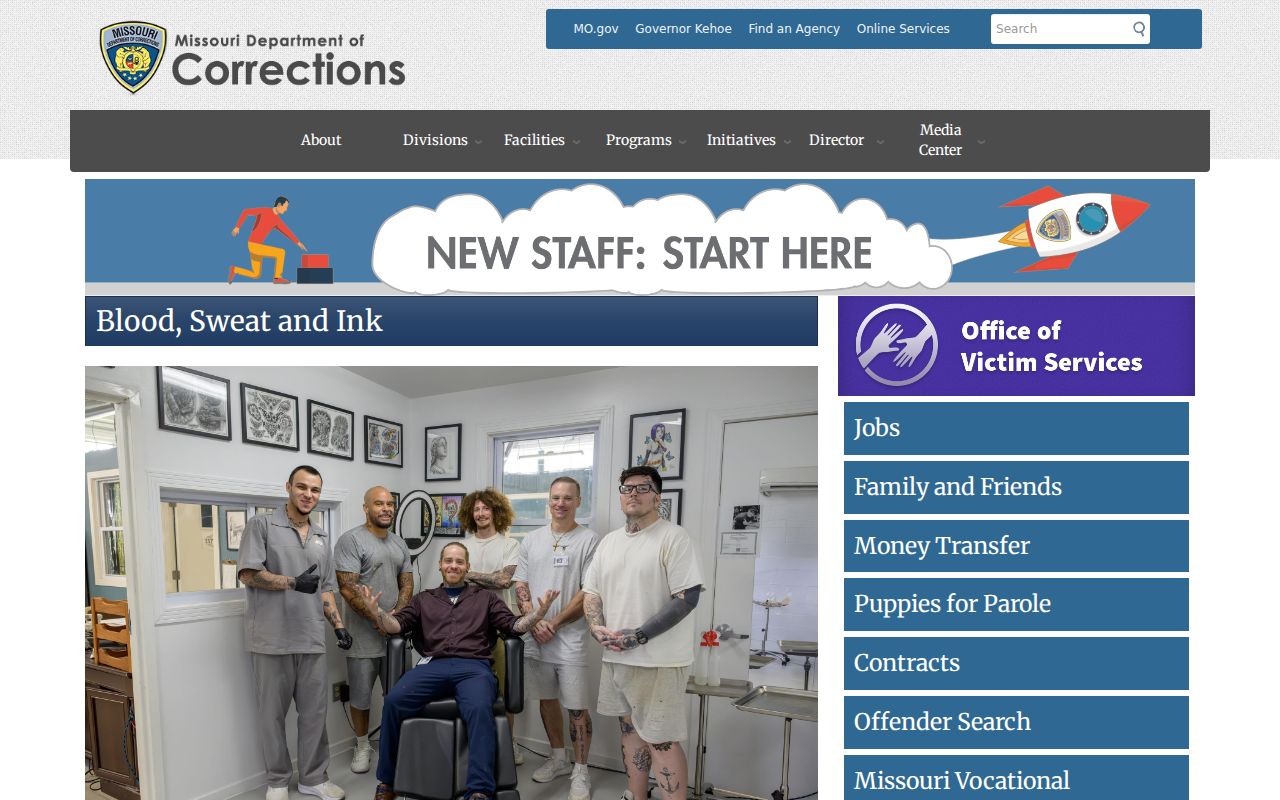
The public route is a separate agency channel, not a substitute for the county courts, parcel systems, or an identity check.
The Missouri State Highway Patrol registry search accepts at least one criterion and offers name, date-of-birth, address, county, tier, status, and radius inputs under its own rules.
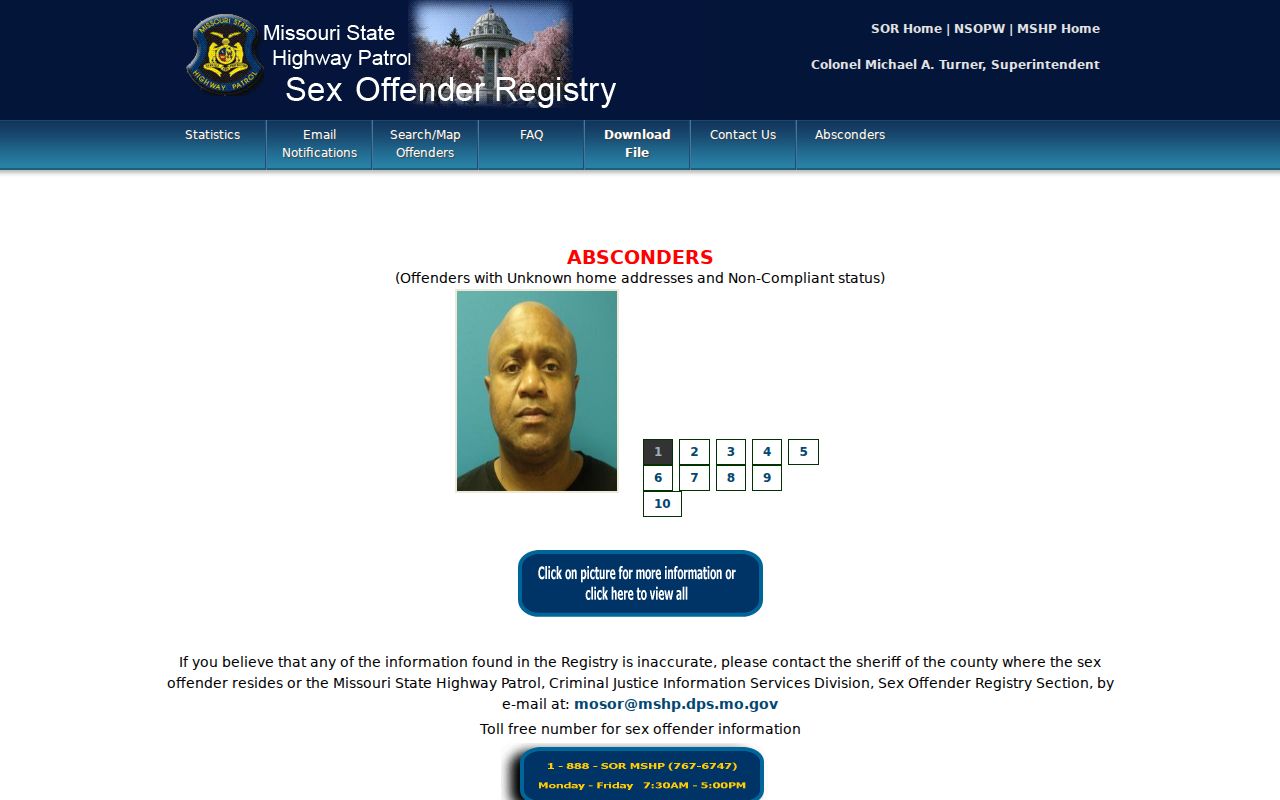
Registry data is not a complete criminal history and the Patrol directs users to verify information with the registering official.
St. Louis Records Request Fallback
When a public index does not show enough, ask the agency that holds the precise record. Missouri’s Sunshine Law places requests and response duties in RSMo §610.023 and addresses copy or research fees in RSMo §610.026. A narrow request should identify the record category, address or name, date range, and preferred electronic format. The Attorney General guidance says no single special format is required. Ask whether an open portion can be separated from any protected material and whether an office terminal or indexed log exists.
The county’s public-records request portal is an available starting route.
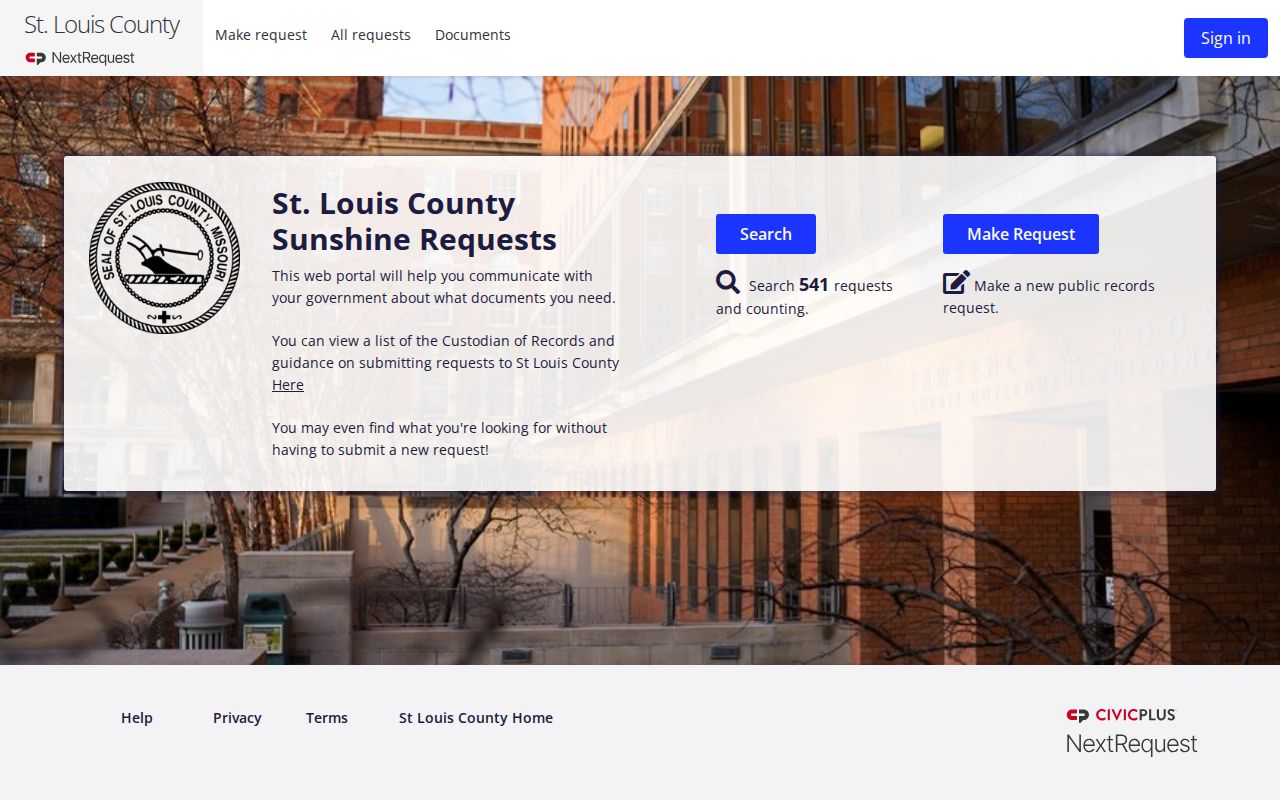
The inspected portal did not expose a stable public field or status workflow, so confirm the current requirements with the named department rather than assuming a portal result or fee.
Note: A request for an identified record is more useful than a broad request for all information about a person.
St. Louis Resident Lookup Limits
Missouri access is record-specific. The county property layer can show an owner mailing field that differs from the situs address. Case.net may omit protected parties and sealed matters. DHSS certified copies require eligibility, and the voter-list form restricts permitted uses. There is no single countywide removal button for every public reference. A correction belongs with the agency that owns the field, such as Assessor/GIS, Elections, the Circuit Clerk, DHSS, or the Secretary of State.
The Missouri Safe at Home program provides qualifying participants a substitute address and mail-forwarding service. Do not try to reverse a substitute address or seek protected data through another record. Commercial neighbor and people-search categories can combine stale data, name collisions, paywalls, and unclear provenance. County, state, and library sources are still limited, but their custodian and date are clearer.
Lawful use. Use St. Louis records for personal, lawful research and respect every access boundary. Never use a record to stalk, harass, intimidate, or harm another person.