
Finding St. Louis Residents in Official Records
Let the detail you already have lead the way. A current street address suits the county real-estate search and its GIS parcel layer. An owner name fits the Recorder of Deeds index. Dated household questions fit the library's directory run. Court and vital records can verify a single fact, but they never create an open list of people. Keep the role clear. Owner of record, case party, registered voter, and directory-listed household are different descriptions, and that distinction keeps a St. Louis residents directory search honest.
Search broad first, since spelling drift and municipal label changes hide matches. Then narrow with a firm identifier. Save the county locator, legal description, deed book and page, directory year, scan page, or case number so the next request is repeatable. A no-result can mean many things. The 1876 split between the City of St. Louis and the county, an old street label, a protected record, OCR trouble, or a portal with limited online coverage can all explain it.
- Run a known address, owner name, locator, or subdivision through the county property search and preserve the result identifiers.
- Use GIS to compare the property address, owner mailing field, municipality, ZIP, and parcel geometry before drawing a conclusion.
- Follow a deed book/page to the Recorder, then search grantor and grantee names only as the instrument supports them.
- For an earlier household, search the library’s county directories by surname and, where present, by the reverse-address section.
- When the needed record is not public online, ask the named custodian for a copy, terminal procedure, or a focused Sunshine Law request.
St. Louis County Parcel Search Fields
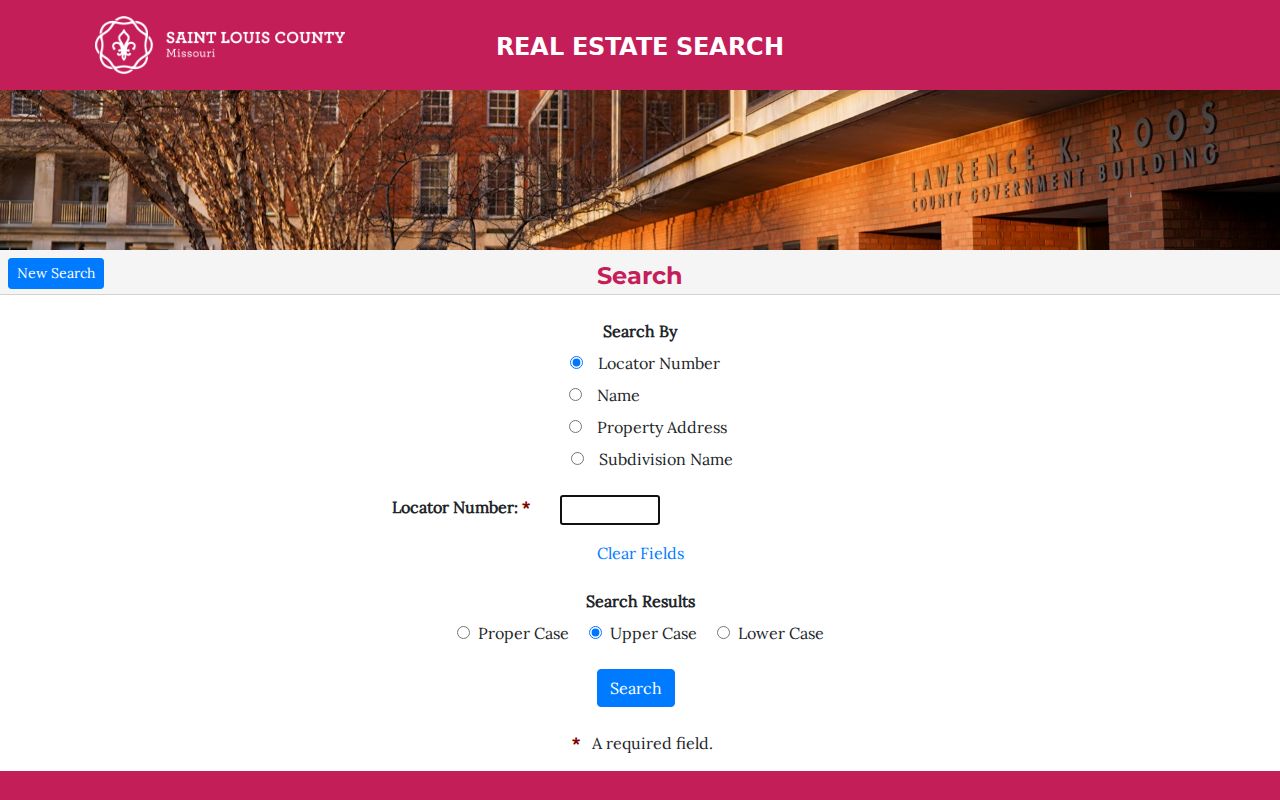
The St. Louis County Real Estate Search is the fastest entry point for a current parcel clue. It splits lookups into separate routes. A property address goes through the address route. A locator number works when a prior record supplied that key. The name route makes sense only when the owner name is your documented lead. A result can carry current assessment and building context. Even so, it says nothing certain about every person at that address.
| County search field | Type | Use in a residents search |
|---|---|---|
| Locator Number | Selected route and text field | A repeatable parcel key; the portal requires a letter in the third position and no spaces. |
| Search by Name | Selected route | Finds an owner-of-record lead, not proof of residence. |
| Property Address | Selected route | Uses street number, street name, optional direction, and optional suffix. |
| Subdivision Name | Selected route and text field | Useful where a recorded subdivision name is known. |
The Real Estate Search page shows its four routes.
That split matters in practice. A parcel locator survives street-suffix and mailing-label variations. Note: Preserve the portal's displayed tax year and record date with any parcel result, because county fields and map layers can change.
St. Louis GIS Separates Address Roles
The county's GIS Property Lookup adds map geometry and keeps address roles straight. Situs fields and owner mailing fields stay separate. Property address and property ZIP sit on the situs side, along with legal description, deed book and page, municipality, school, fire, library, and neighborhood fields. That separation is the safeguard. A mailing address is not a person's location.
- Parcel
- A mapped tax-property unit identified by a county locator.
- Situs address
- The property’s physical address in the GIS field set, distinct from the owner mailing address.
- Index
- A finding tool that points to a record; it is not necessarily the underlying image or certified copy.
- Criss-cross directory
- A reverse-address section that can list a household by street rather than surname.
GIS supports a name search with last name first, plus address, locator, map-extent filtering, and a parcel attribute table. Zoom in before expecting detailed layers. The county warns its GIS data can be inaccurate. Confirm any ownership, boundary, or legal-description point with the agency responsible.
St. Louis Offices Behind Resident Records
St. Louis County divides its records by responsibility. Revenue's real-estate search and GIS supply the parcel and current tax context. The Recorder of Deeds holds deeds and copies. The Circuit Court links local cases to Missouri Case.net. The Secretary of State runs voter verification, and the library keeps the county's historical directory shelf. Pass an official result to the next custodian with its identifier intact.
County Revenue
Real Estate Search
Parcel and assessment route
Use the official portal
Missouri Elections
State voter-verification route
County selection required
County list requests use the EIS form
St. Louis Deed Records Follow the Parcel
Once GIS hands you a deed book and page or a recorded-owner lead, take it to the St. Louis County Recorder search. The grantor transfers an interest. The grantee receives one. Each instrument ties a dated name to a legal description. It does not prove the named party lived there. The Recorder publishes no reliable online start year for its index. An empty web result proves nothing about earlier deeds.
The Recorder's deed-copy order form is the fallback when no usable image appears. Give the property address, owner name, approximate purchase date, document type, and Recorder book and page where known. Recorder book and page are not the assessor's. Ask the office about a public terminal or the current copy process. An online gap is not a records gap.
The Recorder search route page shows the instrument handoff a parcel result produces.
Request the underlying record by document number or book and page. A name match alone is not enough.
Current St. Louis Resident Directory Sources
No single source is a complete, live St. Louis residents directory. Each roll describes a defined role. The parcel layer may yield owner-of-record and property context. The voter form verifies one registration, and only when the required identity data is entered. Case.net identifies public litigants, and a Recorder record names parties to an instrument. Match the question to that limited role, then note the date and the custodian.
| St. Louis source | What the record can confirm | Custodian | Access path |
|---|---|---|---|
| Real Estate Search and GIS | Current parcel, owner field, situs, legal and district context | St. Louis County Revenue/GIS | Official web search and map |
| Voter registration lookup | A specific registration result after exact identity fields | Missouri Secretary of State | Official verification form |
| Recorder instrument index | Grantor, grantee, recording and legal-description trail | Recorder of Deeds | Index, copy order, or office procedure |
| Case.net | Public party role and case events | Missouri Courts | Statewide court search route |
| County directory collection | Dated, directory-listed household or address entry | St. Louis County Library | Digitized browser, microfilm, or print |
Context matters more than repetition. The same name can appear in a voter roll, a parcel record, and a city directory while describing different people, addresses, or eras. Weigh the source date first. Then compare record role, municipality, and address type before merging entries into one identity. The focused St. Louis resident lookup process applies those comparisons to verify a single person without turning a broad search into a personal profile.
St. Louis Voter Records Need Exact Data
The Missouri voter lookup is a verification form, not a browseable county roster. It demands exact data. Enter the registered first and last name, date of birth, the last four Social Security digits, and county, set to St. Louis County. Any mismatch returns nothing. A blank or blocked result proves nothing about residence, because protected participants may register through substitute addresses. The form stays deliberately narrow.
Defined election information takes a different route. The County Board of Elections offers an EIS request form. Permitted list outputs can include address, ZIP, precinct or split, registration date, and voting-date fields. Use is restricted. RSMo §115.158.6 governs the request, and a fee schedule applies. Treat it as a restricted administrative request, never a shortcut to a general-purpose residents list.
St. Louis Court and Vital Record Boundaries
Public case questions start at the St. Louis County Courts orientation page and the Missouri Case.net route. Search a litigant as a party, and record the court, case number, filing date, and role. Read the docket before relying on a hit. Some names never surface. Witnesses, victims, children, sealed parties, and protected information may not appear. A party name is not a current-address finding.
Missouri vital records run narrower still. The DHSS application hub handles certified birth and death requests under the direct-and-tangible-interest rule in RSMo §193.255. State recording began in 1910. Deaths older than 50 years may be disclosed. They can also pass to the Archives under the statutes DHSS describes. The State Archives death index and pre-1910 abstracts are historical finding aids, not substitutes for a certified copy.
St. Louis Historical Directory Collections
For a dated household, the St. Louis County Library History and Genealogy collection reaches well past old phone books. Its holdings include county directories, court-record transcriptions, registers, burial sources, newspapers, maps, atlases, microfilm, and local-history finding aids. The county run starts with 1893. It continues through catalogued years to 1979. Search a surname first, then try a reverse section where the volume provides one.
The library's digitized county directory browser lets visitors pick a year and search a name or part of an address where the scan supports it. OCR can miss punctuation and street abbreviations. Browse the alphabetical pages after any text search. Fragile paper volumes cannot be photocopied. Microfilm readers, scans, and flash-drive copies are available instead. The Directory Book page gives the collection its full historical treatment.
The library genealogy resource marks the local-history route. Use it for older St. Louis residents directory searches.
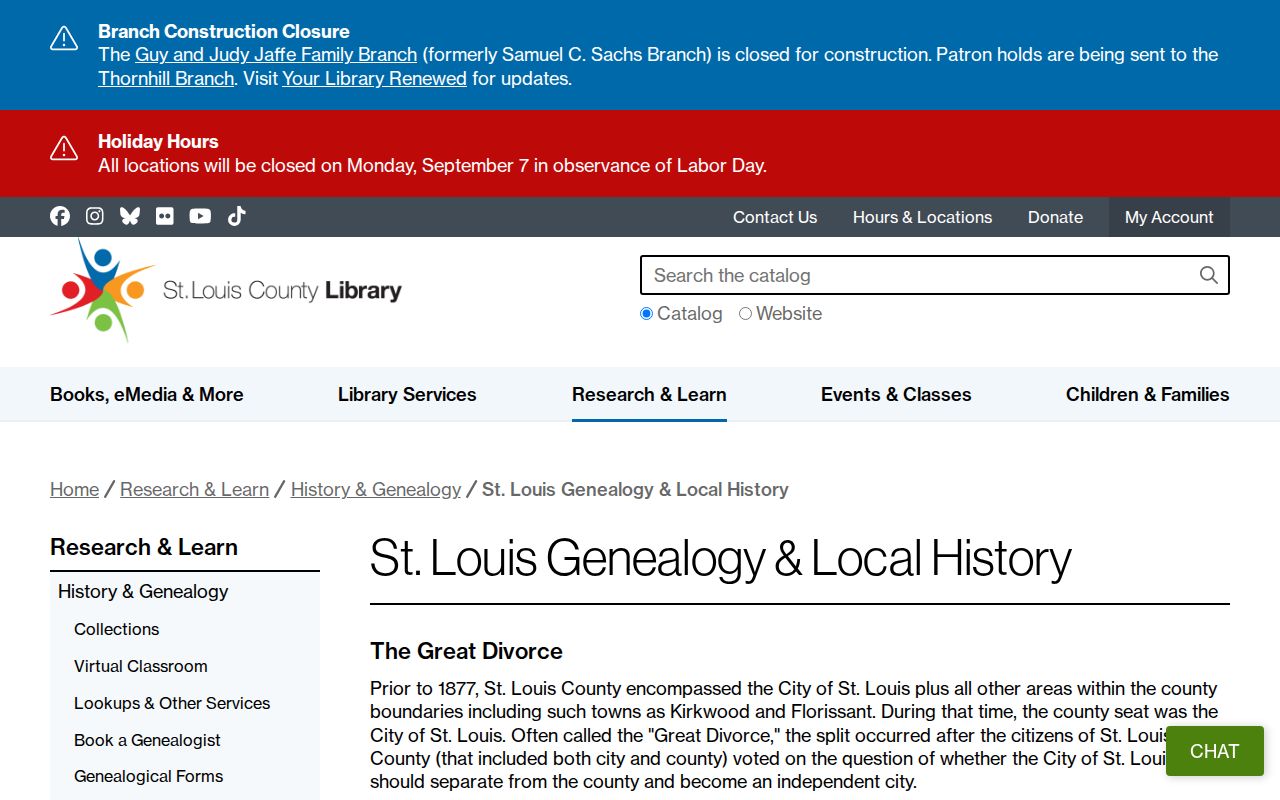
Cite a directory entry with its title, year, page or scan, street spelling, and collection source.
St. Louis Split Records by Date
St. Louis County dates to 1812. The City of St. Louis split from the county in 1876. Clayton took over as county seat in 1877. That sequence reshapes any historical search. Dates decide the custodian. Records made before the split may sit with City of St. Louis custodians, even when later family records point toward the county. An old St. Louis address needs a date and jurisdiction check before it goes to a county office.
This is records geography, not naming trivia. The library's genealogy guidance confirms that combined city and county records stayed with the city before separation, while later county records drifted toward Clayton offices. Pair an early directory, Pitzman's Atlas from 1878, or the 1909 county plat book with the original place label. Modern GIS can then show the current municipal and parcel context. It never rewrites the historic address.
Note: A historic city label, ZIP label, and present municipality can all differ for the same physical place.
St. Louis State Name Sources Have Limits
A county record that names an organization or credential points to a state record. The state record owns the topic. The Missouri Secretary of State Business Services route supplies entity name and registered agent or office. It also supplies formation date, prior names, type, and status. Treat a registered office as a legal contact field. It is not a home address. UCC filings likewise reveal transaction context, never who lives at a location.
The Division of Professional Registration routes users to board-specific licensee searches. Check the credential there. It should match the name in a historical directory, deed, or case record. The portal's services page lists each board's search.
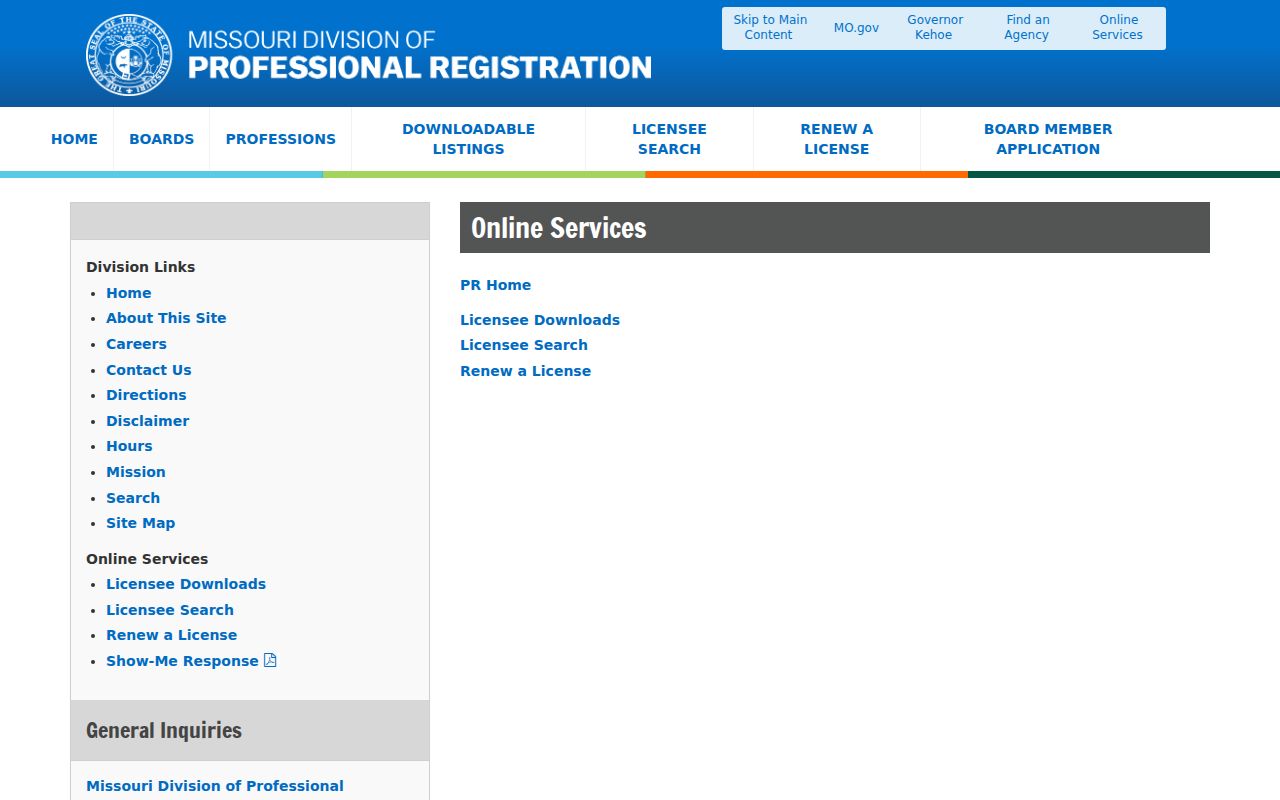
Keep the license number, status date, and board name with any result, since field availability differs by profession.
St. Louis Sunshine Requests Need a Scope
Missouri’s Sunshine Law, RSMo Chapter 610, opens a route when a record is public. The law steps in when that record has no online index. Under §610.023, direct the request to the custodian who holds the record. Name the material and the time range. Ask for a fee estimate before any copying, since §610.026 governs copy and research fees. If a custodian withholds something, request the cited exception. Also ask for any segregable open portions. That approach works better than a sweeping demand for every record about a person.
The county’s public-records request portal is the online starting point for these requests. A department-specific filing can still cite a parcel locator, document number, or permit number. A date span works just as well. Aim the request at the office that owns the field. Revenue or GIS handles a parcel correction. The Recorder covers an instrument, the Circuit Clerk a court file, and DHSS vital-record applications. The same St. Louis County request portal serves as the route. Use it when a direct record search cannot answer a narrow question.
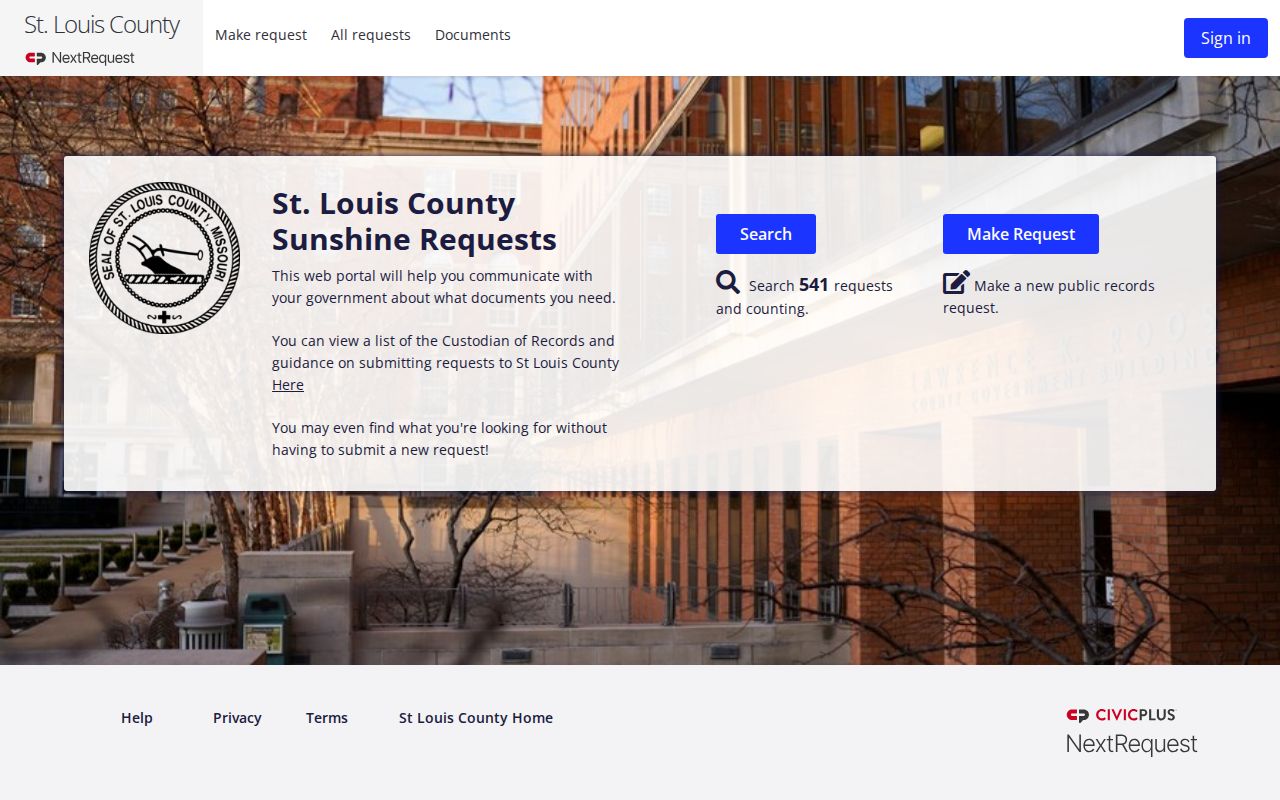
A narrow request works best for a records office. Ask for one record type by name and identifier, not an open-ended search through every roll.
Historical St. Louis Residents Directory Trails
A historical directory is a snapshot, not a live roll. One printed edition can place a name at a St. Louis address, sometimes adding an occupation or a household detail. A reverse directory began in the back of the 1922 city directory. It helps most with an address but no surname. Compare neighboring years and note page numbers. Where legal proof matters, back the finding with a deed. Or use a vital record held by the custodian.
Commercial people-search services blur dates and record roles badly. Official county, state, and library sources keep the date, custodian, and evidence trail clear. The work moves slower. Court parties can be protected. Old directories can preserve details that no longer hold true. Missouri Safe at Home participants may use substitute addresses. These limits are part of responsible St. Louis residents directory research.
Note: Verify any sensitive finding with the original custodian. Keep protected addresses or nonpublic household details out of personal research notes.